
Participants
Georgetown University · 2026
Pakistan’s future, in one forum.
The Georgetown Pakistan Forum convenes policymakers, private-sector leaders, technologists, academics, students, and diaspora leaders to discuss Pakistan’s future and advance smarter public-private diplomacy, evidence-based systems, and practical ideas affecting Pakistan and the 1.2 million-strong Pakistani-American diaspora.
Last year’s gathering
2025 at a glance
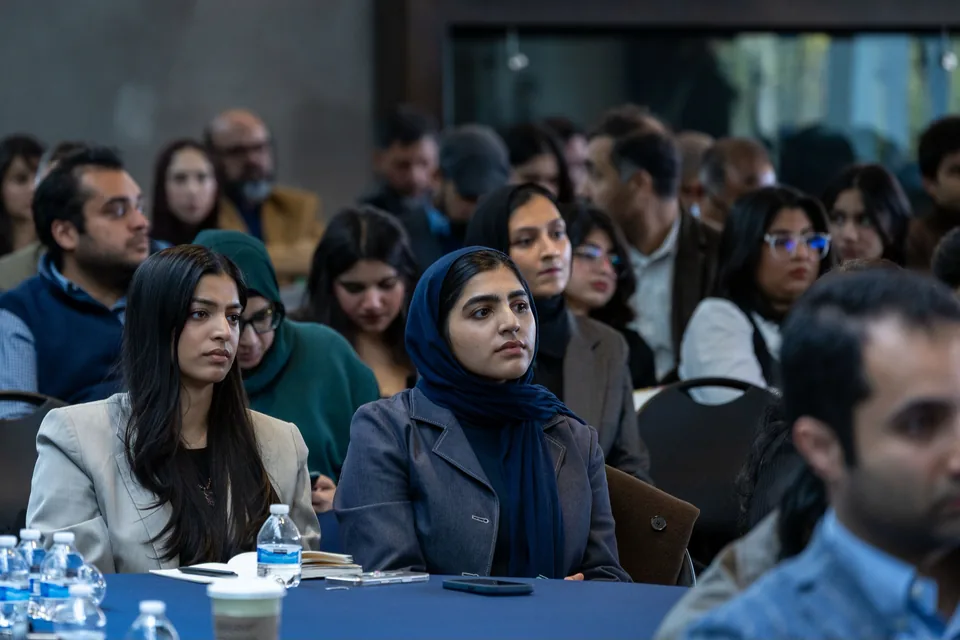
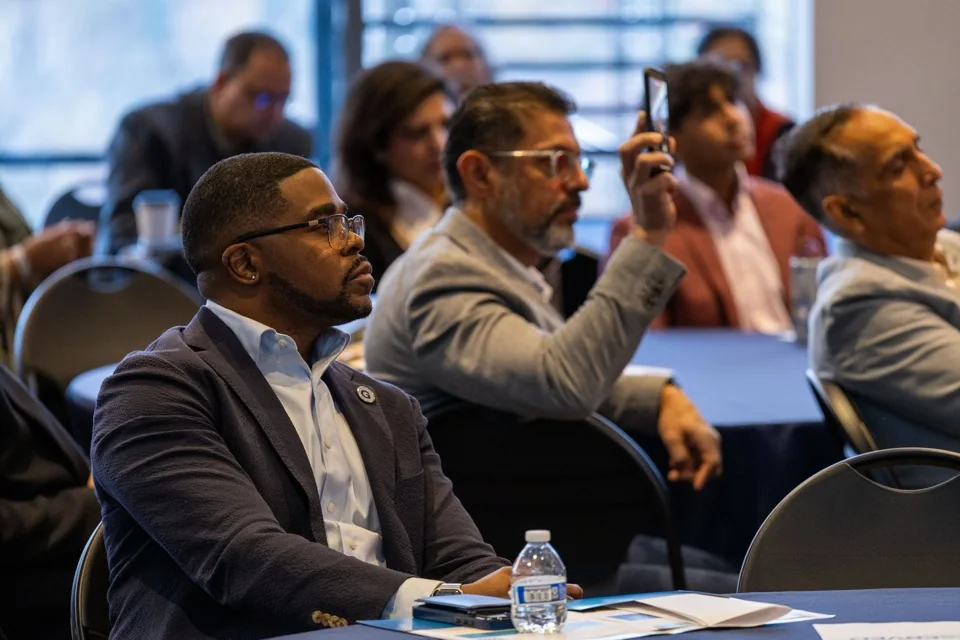
A forum shaped by substantive panels, an engaged audience, and conversation across sectors and generations.
Panelists and experts
Sessions
Five tracks. One forum.
Defense & Strategic Stability
Technology, Innovation & Digital Economy
Health Financing & Infrastructure
Maternal & Community Health
Governance & Democracy
Designed for exchange
The Forum Experience
One convening, built around public conversation, focused working sessions, and ideas ready to be shared.
Public Plenaries
- Cross-sector panels
- Audience Q&A
- Future-facing policy debates
Working Groups
- Five policy tracks
- Practitioner-led discussion
- Policy papers and outputs
Innovation Expo
- Startups, research, and student innovation
- Founders, investors, and policymakers
Leadership
Meet the Team
Meet the student leaders building a Georgetown platform for serious, cross-sector engagement with Pakistan’s future.
Rai Hasen Masoud
School of Foreign Service (SFS) ’27
President, Georgetown South Asian Society
Shahaan Shafi
School of Health (SOH) ’27
President, Georgetown SOH Academic Council
With support from
Conference sponsors




November 13–14
Conference agenda
Two days of working groups, plenaries, the Innovation Expo, and the Forum Debate.
Opening
Defense & Strategic Stability
Lunch
Concurrent sessions
Tech for Finance and Education
Health Financing & Infrastructure
The Forum Debate
A closing exchange built for the room.
The forum culminates in a live debate on the choices shaping Pakistan’s next chapter.
Explore the debateInnovation Expo
Bring an idea into the room.
A dedicated space for startups, research, student innovation, founders, investors, and policymakers.
Learn about the ExpoFeatured voices
Meet the speakers
Leaders, researchers, practitioners, and changemakers shaping important conversations about Pakistan.
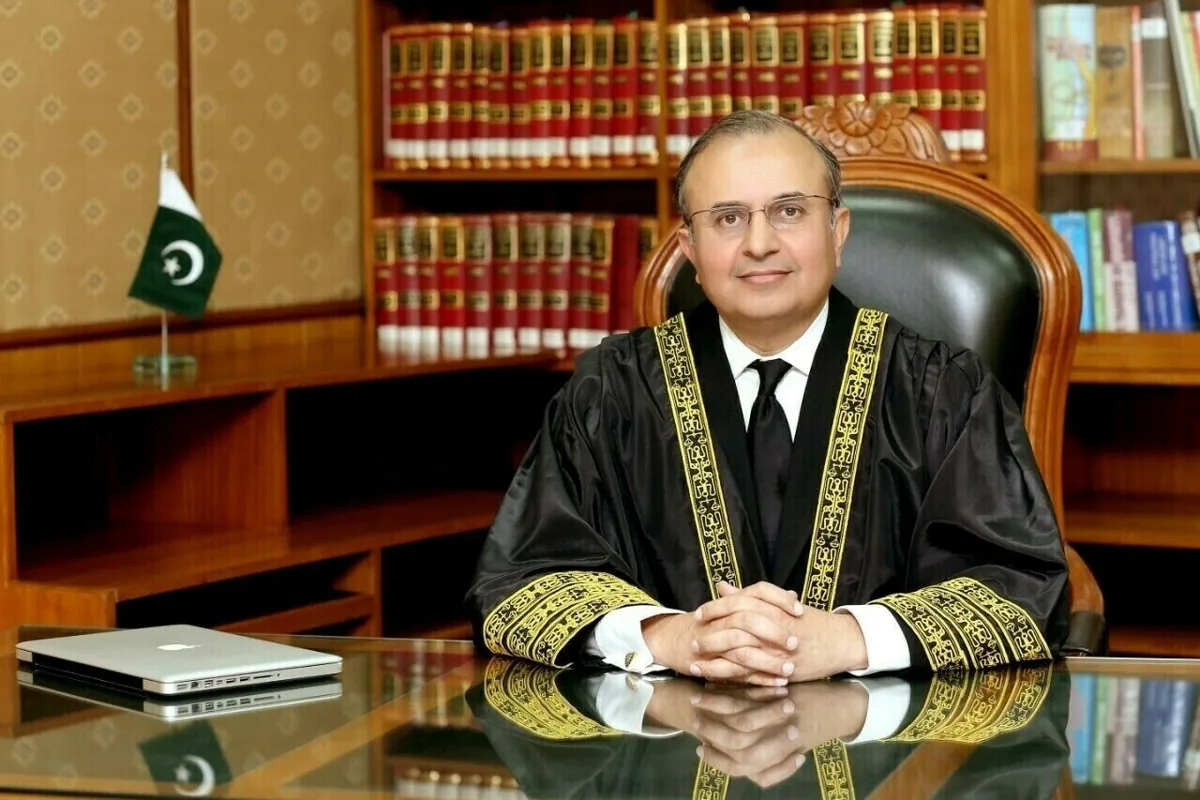
Justice (R) Syed Mansoor Ali Shah
Former Senior Puisne Judge, Supreme Court of Pakistan
Read biography
Justice (R) Syed Mansoor Ali Shah is a distinguished Pakistani jurist, legal scholar, and former Senior Puisne Judge of the Supreme Court of Pakistan. He previously served as Chief Justice of the Lahore High Court, completing over sixteen years of judicial service with significant contributions to constitutionalism, judicial independence, human rights, commercial law, arbitration, and judicial reform.
He currently serves as Distinguished Chair in Constitutionalism & Justice and Professor of Practice at the Shaikh Ahmad Hassan School of Law at Lahore University of Management Sciences (LUMS). He has also been appointed the Oscar M. Ruebhausen Distinguished Visiting Fellow at Yale Law School for 2026 and Bok Visiting International Professor at the University of Pennsylvania Carey Law School for 2027.
Throughout his judicial career, Justice Shah championed institutional reform, fundamental rights, democratic accountability, and technological modernisation. He pioneered Pakistan’s modern pro-arbitration jurisprudence and led the National Arbitration Law Committee in drafting an Arbitration Bill aligned with the UNCITRAL Model Law. He also introduced technology and data-driven reforms within the judiciary and authored Pakistan’s first Supreme Court judgment addressing Artificial Intelligence.
Educated at the University of Cambridge and the University of the Punjab, Justice Shah began his career as a corporate and constitutional litigator before his elevation to the bench in 2009. He is an Honorary Bencher of Lincoln’s Inn and a member of Yale University’s Global Constitutionalism Program.
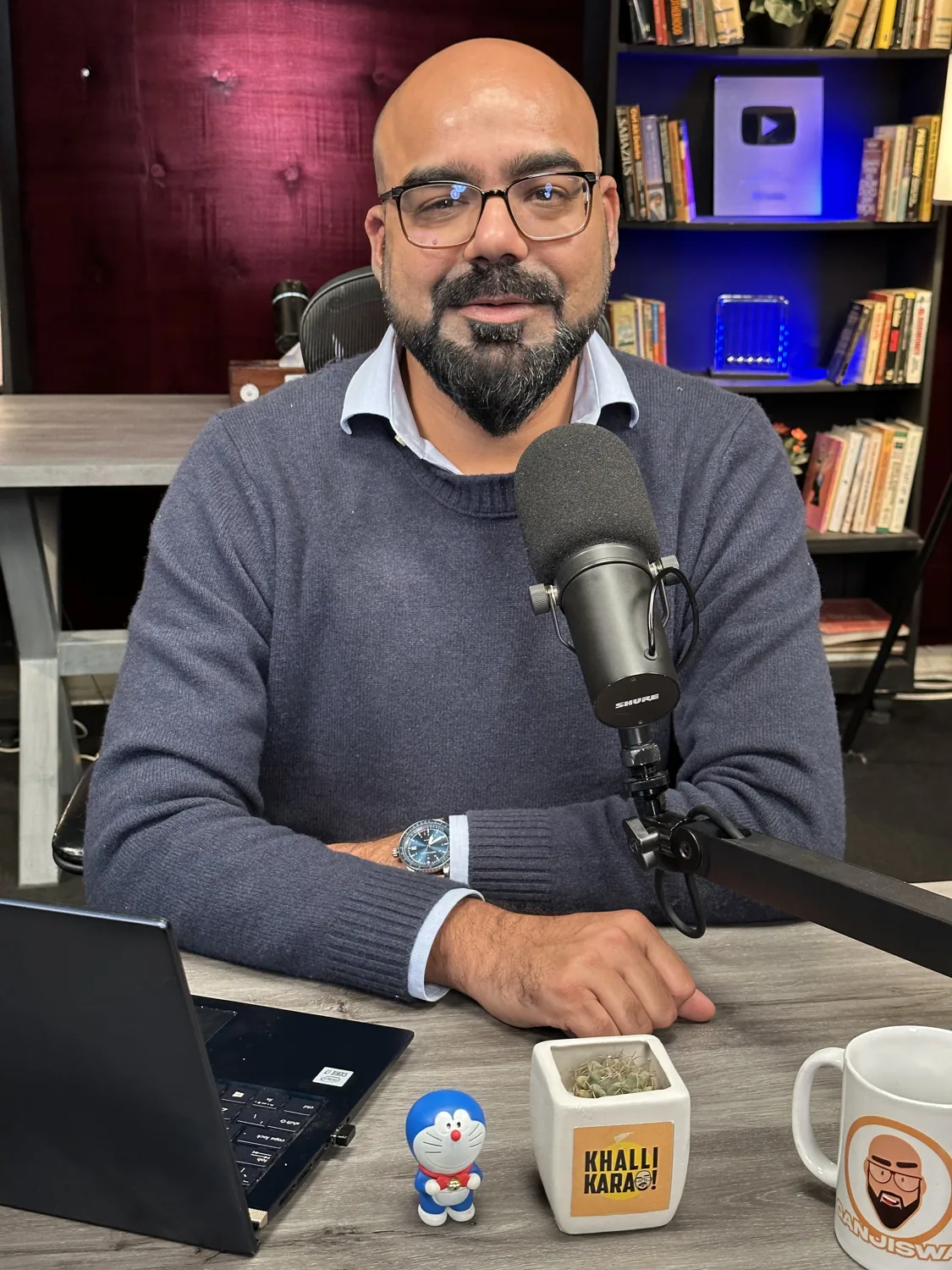
Junaid Akram
Content Creator, Podcaster & Entrepreneur
Read biography
Junaid Akram is one of Pakistan’s pioneering digital media creators, podcasters, and cultural commentators, and a defining voice in the evolution of the country’s independent digital media landscape. Over more than a decade, he has built a community of over 5 million followers across major social platforms, creating content that resonates not only across Pakistan but with South Asian audiences and diaspora communities around the world.
Known for blending humour, social commentary, storytelling, and long-form conversations, Junaid has helped expand the role of digital content in Pakistan from entertainment into a platform for dialogue, ideas, and social reflection. His work explores themes ranging from culture, education, technology, and entrepreneurship to civic life and social change, often making complex conversations accessible and relevant to younger audiences.
What distinguishes his work is its ability to cross borders while remaining deeply rooted in lived South Asian experiences. Through a distinctly Pakistani lens, he speaks to questions of identity, ambition, responsibility, and change that resonate far beyond Pakistan, establishing him as an influential voice in the region’s evolving digital culture.
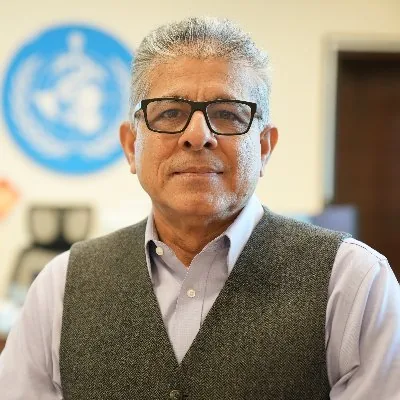
Dr. Hamid Jafari
Former Director of Polio Eradication for WHO (Eastern Mediterranean Office)
Read biography
Dr Hamid Jafari has been a leader of the Global Polio Eradication Initiative (GPEI) for more than two decades. He successfully led the massive polio eradication efforts in India. He served as the Director of Global Polio Eradication and the overall technical lead of the GPEI at World Health Organization Headquarters, Geneva. More recently he served as WHO’s regional director for polio eradication in 22 Regional Member States that include Afghanistan and Pakistan, the two remaining polio endemic countries globally.
He obtained his MBBS degree from Sind Medical College, Karachi University. After a research fellowship at Harvard Medical School, he completed his residency training in pediatrics at Dartmouth Medical School and a fellowship in infectious diseases at the University of Texas Southwestern Medical Center in Dallas. He joined the Epidemic Intelligence Service (EIS) at the US Centers for Disease Control & Prevention (CDC) in 1992, and quickly rose to become the Director of the Global Immunization Division and later served as the Principal Deputy Director of the Center for Global Health at the CDC.
Dr. Jafari has published more than 100 scientific papers and book chapters on pathogenesis of infectious diseases, polio eradication and other vaccine-preventable diseases and global health security.
Plan your visit
On the Hilltop in Washington, DC
Venue details and an accessible campus map will be published closer to the conference.
Campus map coming soon